
Our Blog

Does Your Child Need Endodontic Treatment?

July 17th, 2019

Baby teeth come with a built-in expiration date. That charming first smile is meant to make way for a healthy, beautiful adult smile. Unfortunately, before they are ready to make way for permanent teeth, primary teeth can be affected by decay, trauma, or infection—problems which can lead to damage to the pulp within the tooth. If your dentist tells you that your child’s tooth needs specialized endodontic treatment, is treatment really that much better for your child than losing a baby tooth prematurely?

Quite often, the answer is yes!

Baby teeth do much more than serve as temporary stand-ins for adult teeth. They are essential for:

  • Biting and chewing—a full set of baby teeth helps your child develop proper chewing, which leads to healthy digestion. And chewing also helps build face and jaw muscles.
  • Speech development—primary teeth help guide speech production and pronunciation.
  • Spacing—a baby tooth serves as a place holder for the adult tooth waiting to arrive. If a primary tooth is lost too early, the remaining baby teeth may drift from their proper location. This, in turn, can cause overcrowding or misalignment of the permanent teeth when they do erupt.

Baby teeth, like adult teeth, contain living pulp tissue. The pulp chamber inside the crown (the visible part of the tooth) and the root canals (inside each root) hold nerves, blood vessels, and connective tissue. When the pulp is damaged by trauma or infected, a baby tooth can still be saved with endodontic treatment. Endodontic treatment in baby teeth can take two forms.

  • “Vital” pulp is pulp that can be saved. Vital pulp therapy uses procedures to deal with damaged pulp inside the crown, or visible part, of the tooth. Pulp therapy can be used on teeth when only the top of the pulp has been affected by decay, limited exposure, infection, or trauma, but the root pulp remains healthy. Specific treatment will depend on the nature of the pulp injury, and a crown will usually be placed over the tooth after treatment to protect it.
  • With non-vital pulp, your dentist will probably recommend a traditional root canal procedure. All of the pulp tissue will be removed from inside the crown and the roots, and the pulp chamber and root canals will then be cleaned, disinfected, shaped, and filled. Finally, because the treated tooth will be more fragile, a crown will be used to protect the tooth from further damage.

There can be good reasons for extracting a seriously damaged baby tooth, and there are situations where preserving the tooth is the best and healthiest option for your child. Discuss your options with Dr. HJ Turner and Dr. DJ Turner when you visit our Spartanburg, SC office for the safest, most effective way to treat your child’s compromised tooth.
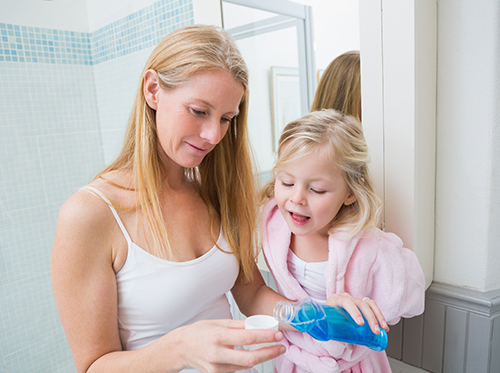

Which mouthwash should you use?

July 10th, 2019

Although using mouthwash is certainly not the equal of brushing and flossing, it does have benefits for your dental hygiene. If you use mouthwash regularly, you should find out which type is best suited for your needs. Here are some things to think about the next time you’re at the store.

The first item to weigh is why you want to use mouthwash. If the reason involves a high risk for cavities, you should focus on a mouthwash that contains fluoride. Make sure to double-check the label, because some mouthwashes do not necessarily include fluoride.

If you’re looking for a mouthwash to fight gingivitis, select an oral rinse with antibacterial properties. Make sure to read labels and avoid picking one that contains alcohol. Antibacterial mouthwash would also be best for a patient who has periodontal disease.

Another option is prescription mouthwash. These should be discussed with Dr. HJ Turner and Dr. DJ Turner and/or your pharmacist in order to avoid negative side effects. Pay close attention to the directions regarding how much to use and for how long. Keep in mind that some brands may lose their effectiveness if you use them on an ongoing basis.

For children, you can find a mouthwash that changes the color of plaque on their teeth. This is a fun way to help them understand how well they are brushing, and what areas they need to focus on. It can even be a tool for adults who have trouble reaching certain areas of their mouth.

While mouthwash is generally considered as a safe means to improve your oral health, you need to keep certain things in mind. Avoid using any mouthwash that has alcohol in it. If you are using a strong one, it can reduce your sense of taste over time. Be wary of a mouthwash that claims it can loosen plaque; this is not accurate and can mislead consumers.

We hope these simple suggestions will help you the next time you’re at the store. Make sure you pick the right mouthwash to keep that healthy smile! Feel free to contact Dr. HJ Turner and Dr. DJ Turner at our Spartanburg, SC with any questions you may have.

Summer Sports and Mouthguards

July 3rd, 2019

School’s out and you’ve emptied your gym locker until next fall. But while you’re stowing away the football gear, the basketball warm-ups, the field hockey sticks, and all the other equipment you’ve collected over the school year (that’s where that other shoe went!), be sure to keep one item handy: your mouthguard.

Team and contact sports like football, basketball, and wrestling aren’t the only potential dental dangers. In fact, almost any sport or activity can be made safer when you use your mouthguard.  While you’re keeping active and fit in the summer months, remember to look out for your smile.

  • Sports on wheels

Biking, skate boarding, rollerblading—it only takes one fall to make you realize that roads, sidewalks, and concrete are not ideal landing pads. If you do take a spill, using a mouthguard, along with your helmet, will help protect your teeth and jaw.

  • Court sports

Handball and tennis are not what we consider contact sports, but an unexpected bounce from a ball, or a completely unexpected backhand from your partner, can lead to dental injuries. Ace your workout and wear a mouthguard.

  • Water sports

A fall in the water can lead to a collision with your surfboard or water skis, and water polo often seems to be a game of stamina, accuracy and elbows. Wear your mouthguard on land and sea, and help reduce your chance of dental injury.

  • Team sports

Anyone who has played summer league baseball, softball or soccer knows that occasional contact with other players is pretty much a given. Cushioning your head, mouth, and teeth with a mouthguard will not only protect you, but keep you in the game—and your teammates will appreciate that!

If you already use a mouthguard, keep up the good work! If you don’t, talk to Dr. HJ Turner and Dr. DJ Turner about the importance of protecting your smile with a mouthguard. There are ready-made options available at drug stores and sporting goods shops. These will provide protection to your mouth and teeth, but can sometimes be bulky and uncomfortable and should never be used with braces. If you would like a mouth protector that provides the best fit and comfort, or if you wear braces, we can customize a mouthguard in our Spartanburg, SC office that will be a perfect fit for your teeth and bite.

Whatever activity you choose, play it smart! Don’t gear up without your mouthguard, and you’ll greet next year’s classes energized, fit, and sporting a beautiful smile!

Dental-Healthy Snacks for Your School-Aged Child

June 26th, 2019

Kids are constantly active and constantly growing. No wonder they’re constantly hungry! When it’s time for a snack, here are some tips to make between meal treats timely, tasty, and tooth-friendly.

Keep snacks to a minimum

Every time we eat, we’re also providing food for the bacteria in our mouths. Bacteria use sugars to produce acids. These acids weaken our enamel and can lead to cavities. Luckily, we have a natural way of protecting our teeth. Saliva washes away food particles and bacteria, and even provides substances that strengthen our teeth in the hours between meals.

When we eat throughout the day, there is no chance for this recovery period to take place. Small children aren’t usually able to get through the day without a few snack periods, which is perfectly normal. Just try to make sure that snacking doesn’t become all-day grazing!

Avoid foods that contain sugar and carbohydrates at snack time

We know that sugar leads to an increased chance of cavities because bacteria convert this sugar into acids that damage our enamel. But carbohydrates should also be in the no-snack zone. Why? Because carbohydrates break down into sugar very quickly. So while you wouldn’t offer your child a daily mid-afternoon snack of sodas and chocolate bars, those muffins, doughnuts, chips, and bagels should be on the “special treat” list as well.

Dental-healthy snacks

Luckily, we are left with many healthy and convenient choices when your child needs a nibble.

  • Crunchy, crisp fresh fruits and vegetables provide vitamins as well as a gentle scrubbing action to help clean teeth. They are also rich in water, which helps us produce the saliva that naturally washes away food particles and bacteria.
  • Low-fat yogurts and cheeses provide essential calcium for strong teeth and the vitamin D that helps us absorb calcium.
  • Whole grain breads, cereals, and crackers are healthier than products made only with white flour because they retain valuable vitamins and minerals that have been removed from refined grains.
  • Lean meats, peas, legumes, and eggs provide protein that helps build connective tissue and maintain tooth structure.
  • Water helps stimulate saliva production and provides cavity-fighting fluoride. Win/win!

You are constantly looking for ways to make your children’s lives better. Mix and match any of these foods for a snack that’s not only good for their teeth, but rich in the proteins, vitamins, and minerals needed to keep them active and growing throughout their school years. If you have questions about your child’s dietary needs, feel free to ask Dr. HJ Turner and Dr. DJ Turner at our Spartanburg, SC office.

“Dr. Jensen and his staff are wonderful! They are caring, knowledgeable, and friendly. We have been with Pediatric Dentistry of Spartanburg for over a year now and I'm happy we found them. I wouldn't want my children to go anywhere else.”

~ Sequita W

“Both of my daughters have been patients of Dr. Turner for years. I have found Dr. Turner and his staff always to be loving, caring, and professional.”

~ Lois W

“They are always gentle with my children. They make them feel very comfortable too. We have been coming for so long that they are like family.”

~ Liva R
patient photo patient photo patient photo
Back to Top