September 22nd, 2021
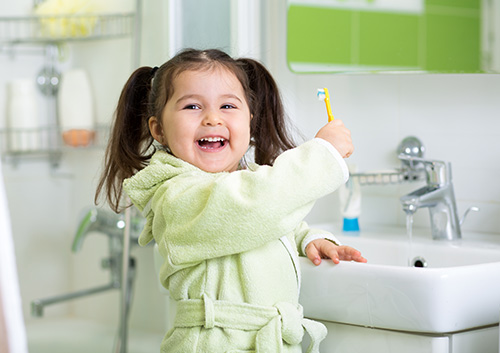
At Pediatric Dentistry of Spartanburg, we know that brushing your toddler’s teeth can be an intimidating prospect. So we’re providing a few tips in the hope of making the process a lot more easy, effective, and all-around enjoyable for everyone!
Start by getting into a position that gives you control and enables you to see well into your child’s mouth. If you can see clearly, you will be able to maneuver the toothbrush better around your son or daughter’s mouth for a better quality of brushing.
It’s important to choose a time when your toddler is calm. Have your little one sit with his or her favorite stuffed animal, or play a fun movie in the background so your child can focus on something comforting while you’re brushing.
Using a circular motion, brush all sides of their teeth. Be sure to let your toddler have a turn after you’re done, to start getting used to it. This way, he or she is more likely to repeat the brushing and flossing exercise when your youngster is old enough.
Dr. HJ Turner and Dr. DJ Turner and our team agree that brushing and flossing need to be performed with kindness and care. To ensure your child learns good dental hygiene habits early on, be gentle and make this time a happy, learning time.
Your child should also have regular appointments at our Spartanburg, SC office for checkups and cleanings to keep on track!
September 15th, 2021
It’s common for toddlers to be wary of strangers, but their first experience at the dentist shouldn’t be a scary one. Dr. HJ Turner and Dr. DJ Turner and our team have five tips for you to make your child’s first visit to Pediatric Dentistry of Spartanburg easy as pie!
- Bringing your child to one of your own appointments before his or her first dental visit can calm your little one’s nerves. This gives your son or daughter the opportunity to get familiar with our office and see a cleaning isn’t very scary.
- Our big dental chair can be fun! Toddlers love games, and seeing the chair go up and down can make it seem like an amusement ride rather than sitting down for an exam.
- Dr. HJ Turner and Dr. DJ Turner and our team hand out cool toothbrushes and stickers to kids after their appointment. Your child will love the fun-colored toothbrush and can look forward to a post-appointment prize at the next visit.
- Schedule your appointment for a time that sets you up for success. Bringing your child to our Spartanburg, SC office an hour before he or she is due for a nap may be a tantrum just waiting to happen.
- Kids love books! Try reading your toddler bedtime stories about what happens at the dentist before you come in for the appointment. We recommend Dora the Explorer’s Show Me Your Smile, written by Christine Ricci.
September 8th, 2021
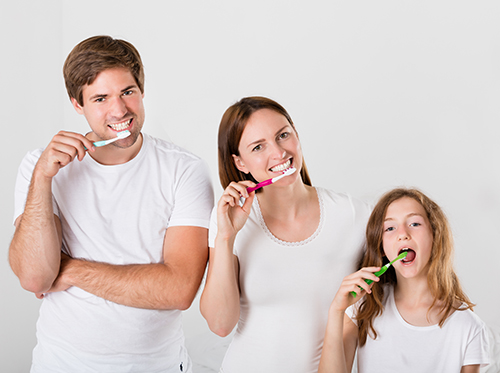
It’s gratifying to know your child has good oral hygiene, especially starting from an early age. We know it can be difficult to get your son or daughter to brush those tiny teeth, let alone brush them well enough, every day. Dr. HJ Turner and Dr. DJ Turner and our team are here to give you some tips on how to help your youngster learn excellent oral health habits.
Your child should brush his or her teeth at least twice a day in order to prevent cavities and decay. An grownup may have to assist with flossing or using mouthwash. Always make sure your little one doesn’t swallow toothpaste or mouthwash in the process.
Only buy alcohol-free mouthwash, especially if you have young children in your household. Oral healthcare should be made fun from the start, to create good habits!
Helpful Tips
- Set a good example. Brush your teeth with your children and make it fun! Pick a two-minute song to play while brushing and dance along to it.
- Make it a race to the bathroom to see who can get the toothbrush and floss out first.
- Use a sticker sheet. For every night your children brush well, give them a sticker. After they’ve earned certain number of stickers, they win a reward. Let them pick it!
- Let your child check your brushwork, or try letting your youngster brush your teeth!
- Allow children to play with a toothbrush if they want to. They can brush their favorite stuffed animal’s or doll’s teeth before bed as well.
- Let your child pick his or her own toothbrush or toothpaste from a range of options you provide. Kids might pick one with their favorite cartoon character(s) on it, for example.
- Get a two-minute brushing timer your child can flip over when he or she starts to brush. Your son or daughter can watch the sand fall until it’s empty, which notifies the kid it’s time to stop brushing.
- Buy special children’s mouthwash that is colored to stain the areas of the child’s mouth where he or she needs to re-brush for effectiveness.
- Be gentle when your little one makes a mistake like forgetting to brush, and remind your son or daughter about the importance of good oral health in a fun, loving way.
There are plenty of ways to make brushing your child’s teeth more fun and effective. When Dr. HJ Turner and Dr. DJ Turner and the parents work together, we can help establish good oral health habits in children that will last a lifetime.
Take the trouble to set a great example for your children, and they will follow in your footsteps. If you’re concerned about your child’s oral health, contact our Spartanburg, SC office and schedule an appointment with our team.
September 1st, 2021

Labor Day, celebrated on the first Monday each September here in the United States, is a holiday devoted to the American working community. The purpose of the holiday is honoring the country's workers and their contributions to the strength of our country as a whole.
How Labor Day Started
There is actually some debate as to the origins of Labor Day. It is uncertain whether Peter McGuire, a cofounder for the American Federation of Labor, or Matthew Maguire, who was the secretary of Central Labor Union of New York, had the great idea. However, the Central Labor Union's plans were what launched the first Labor Day in America.
The First Labor Day
The very first Labor Day was celebrated on September 5th, 1882. The Central Labor Union then held annual celebrations on September 5th for what they called a working man's holiday. By the year 1885, the Labor Day celebration had spread to many different industrial areas, and after that it began spreading to all industries in the United States.
Labor Day Today
Labor Day today is a huge United States holiday during which we honor the country's workers with a day of rest and relaxation or a day of picnics and parades. This holiday is truly one to honor the many people who work hard to contribute to the economic well-being of our great country!
Our team at Pediatric Dentistry of Spartanburg hopes all of our patients celebrate Labor Day, and every holiday, safely and happily. Whether you stay in the Spartanburg, SC area, or travel out of town, have fun, and don't forget to brush!







 Website Powered by Sesame 24-7™
